
Written by —


Written by —
With 15 years in data and the last 12 months hands-on with Snowflake on customer projects, I decided to take the SnowPro Core certification. We're a Snowflake partner, so I had access to the Snowflake Partner Network's training resources, including a short Snowflake fundamentals course and a 40-question practice exam. I took the course first to refresh the fundamentals end-to-end, then sat the practice exam to see where I actually stood.
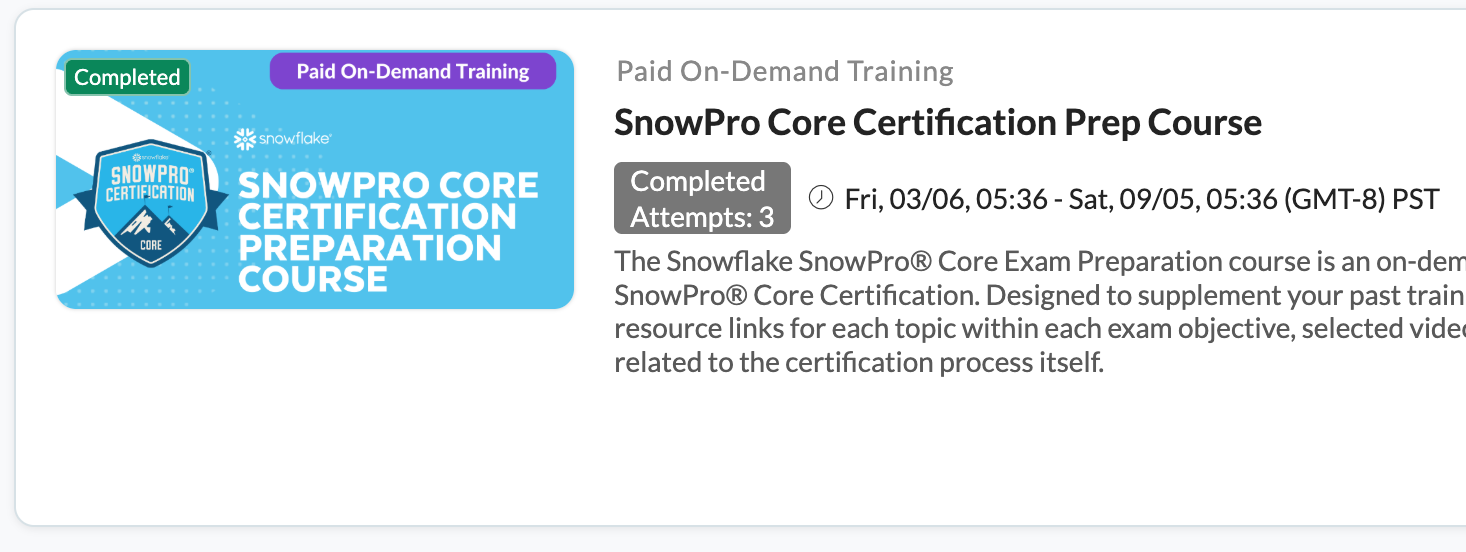
The practice exam result was sobering: 20 out of 40, exactly 50%. The pass bar on the real exam is 750/1000 (~75% scaled). Practical project experience had given me strong intuition for data loading, query tuning, and warehouse sizing, but it had left me weak on governance details (masking vs row-access vs aggregation vs projection policies), the data-sharing privilege model, and the feature-by-edition gating tables. Exactly the kinds of factual recall that the exam emphasizes and that day-to-day project work doesn't repeat often enough to learn by heart.
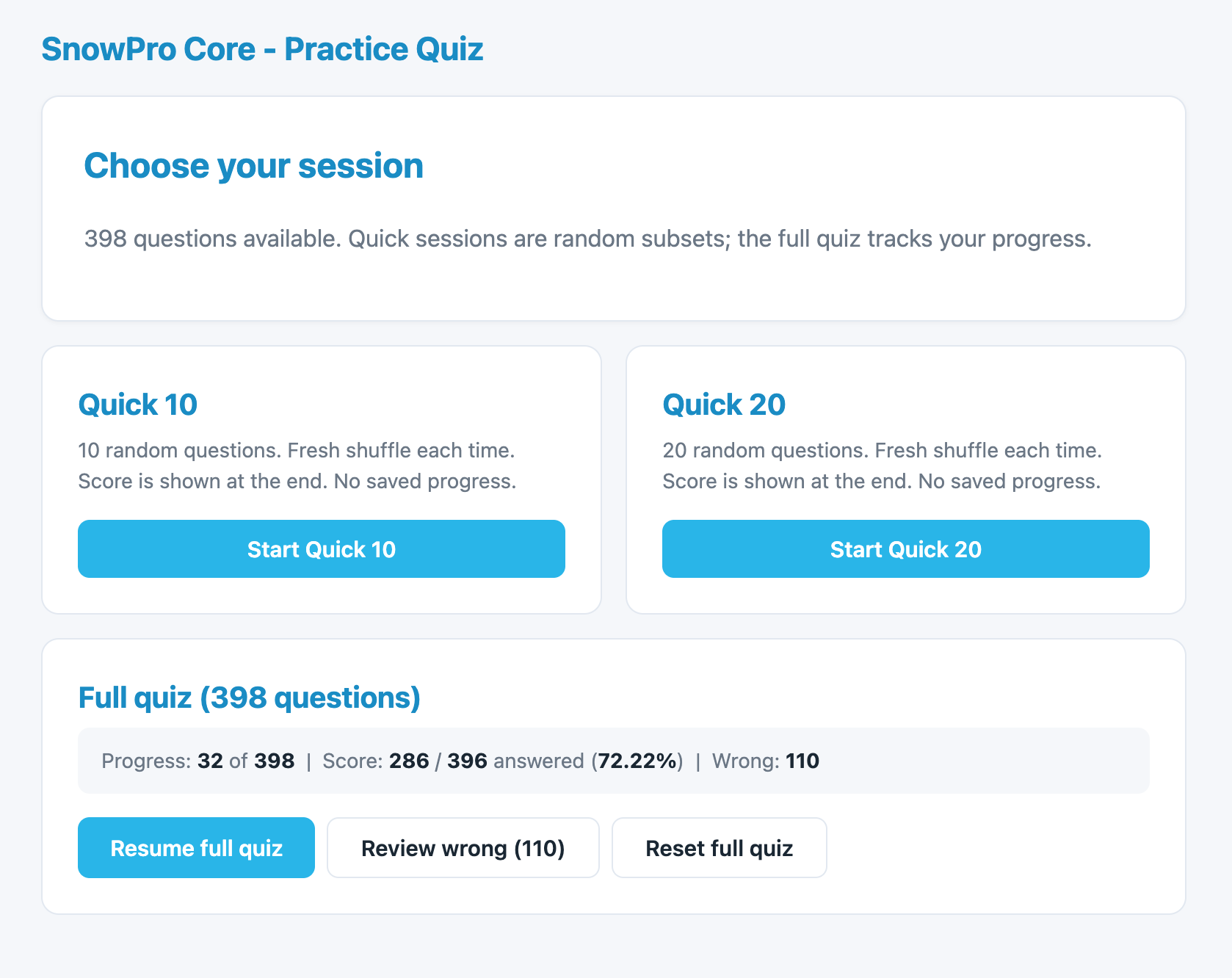
I went in two parallel directions. The first was building a custom HTML practice quiz tool from an external PDF question bank; 105 pages of which most was raster-rendered text that pdftotext couldn't read, so it required a Tesseract OCR rescue pass to recover ~80 hidden pages. The end result was a single-file, offline-capable quiz with 398 questions, progress persistence in localStorage, image embedding for chart-based questions, and a "review wrong only" mode that filters live as you re-answer.
You guessed it. I used Claude for creating the tool, but I also used it in another way.
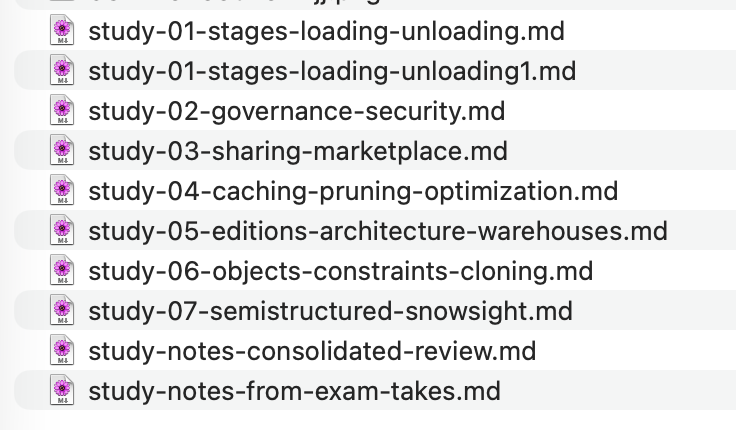
The second track was using AI as a study partner: I had it generate seven topic-focused cheat sheets directly from my practice-exam misses, then drill each one with interactive multiple-choice quizzes, immediate feedback, and explanations grounded in the official Snowflake docs.

The most useful pattern wasn't the tools themselves but the forced-verification loop. At one point I ran a SQL example the AI gave me and got a parse error; the example assumed FLOAT(18, 6) was valid syntax in Snowflake. It isn't; only NUMBER/DECIMAL/NUMERIC accept precision and scale parameters. From then on I checked every concrete claim I wasn't sure about against the docs or directly against Snowflake. That habit caught the real traps I would otherwise have memorized as truths: that PRIMARY KEY isn't enforced on standard tables (it's metadata only), that the result cache survives warehouse suspension but the local SSD cache doesn't, that Query Acceleration Service helps outlier queries but does nothing for queueing. Use AI as a sparring partner, not as a source of facts.
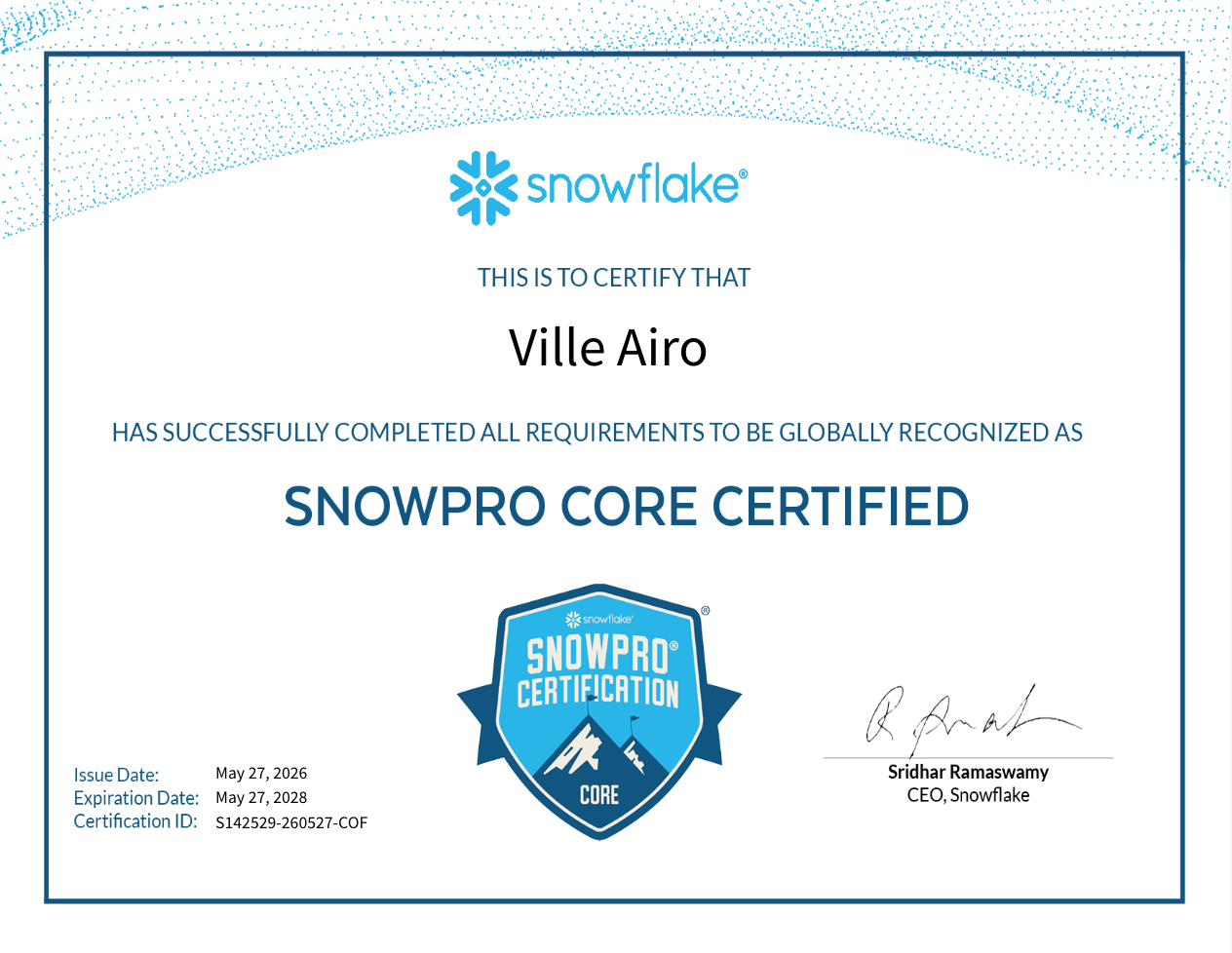
I passed with 850/1000; comfortably above the threshold, but not the 90% I was targeting in late-stage practice. The points I left on the table were almost entirely in data sharing (the IMPORT SHARE vs CREATE DATA EXCHANGE LISTING distinction, the IMPORTED PRIVILEGES flow for downstream consumer roles) and the edition-gating tables I hadn't rehearsed enough. Building a custom quiz tool was arguably overkill if the only goal was passing, but I now have a reusable HTML template I'm already adapting for dbt certification prep.
If you're heading into SnowPro Core in 2026, here are three practical takeaways.
First: take a real timed practice exam early, not at the end of your prep. Self-assessment lies; you don't know what you don't know until the exam surfaces it.
Second: spend disproportionate time on whichever weakest domain emerges, not evenly across the syllabus. Re-reading what you already know is comfortable but unproductive.
Third: if you use AI as part of your prep, verify every concrete claim before you commit it to memory. Run the SQL, read the doc, click through to the source. The AI is good at surfacing concepts and patterns and structuring drills; it is not a reliable source of factual ground truth. Treat it as a colleague who reads fast but occasionally bluffs; useful, but you check their work.

Written by —

%20Large.jpeg)